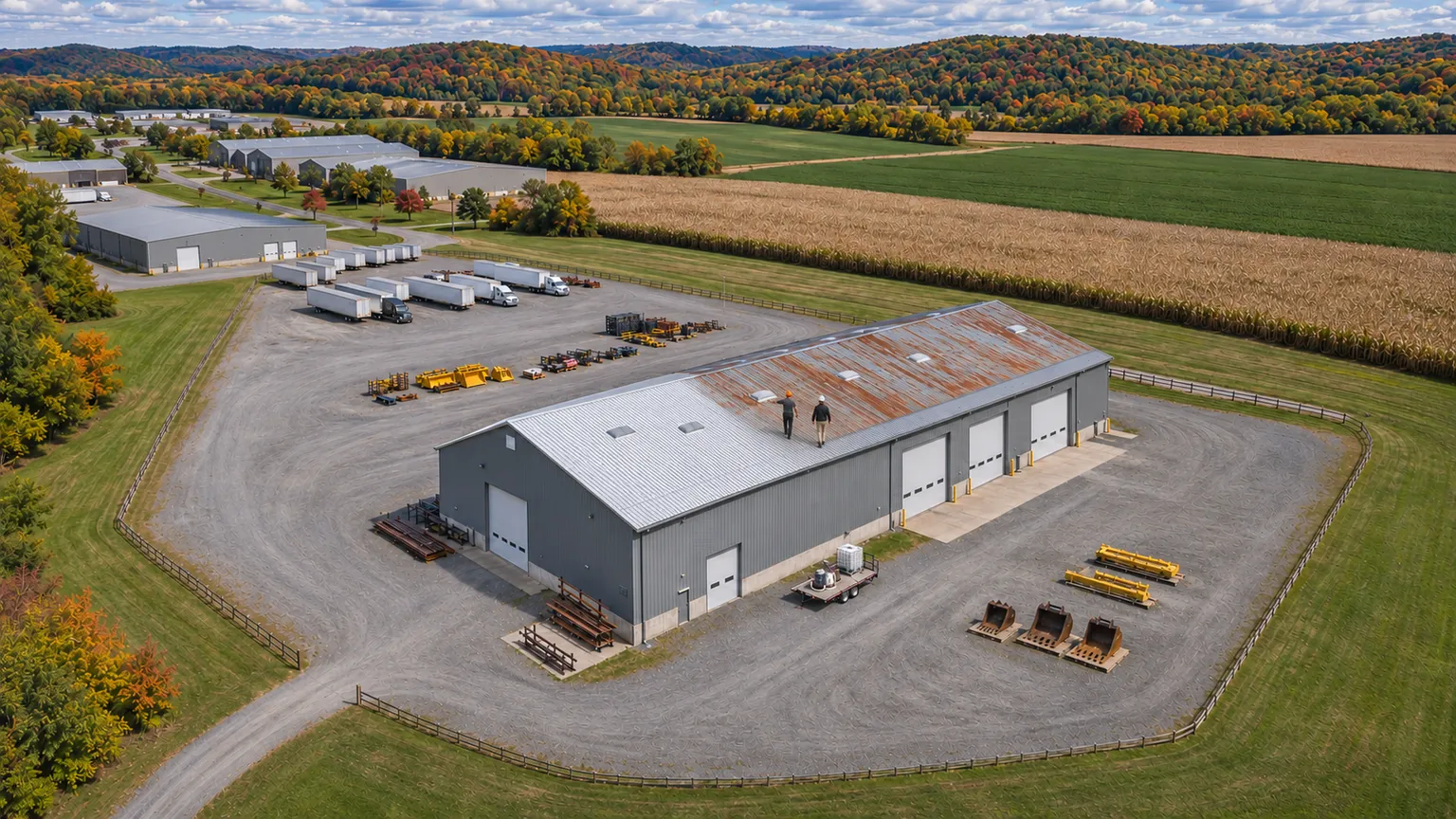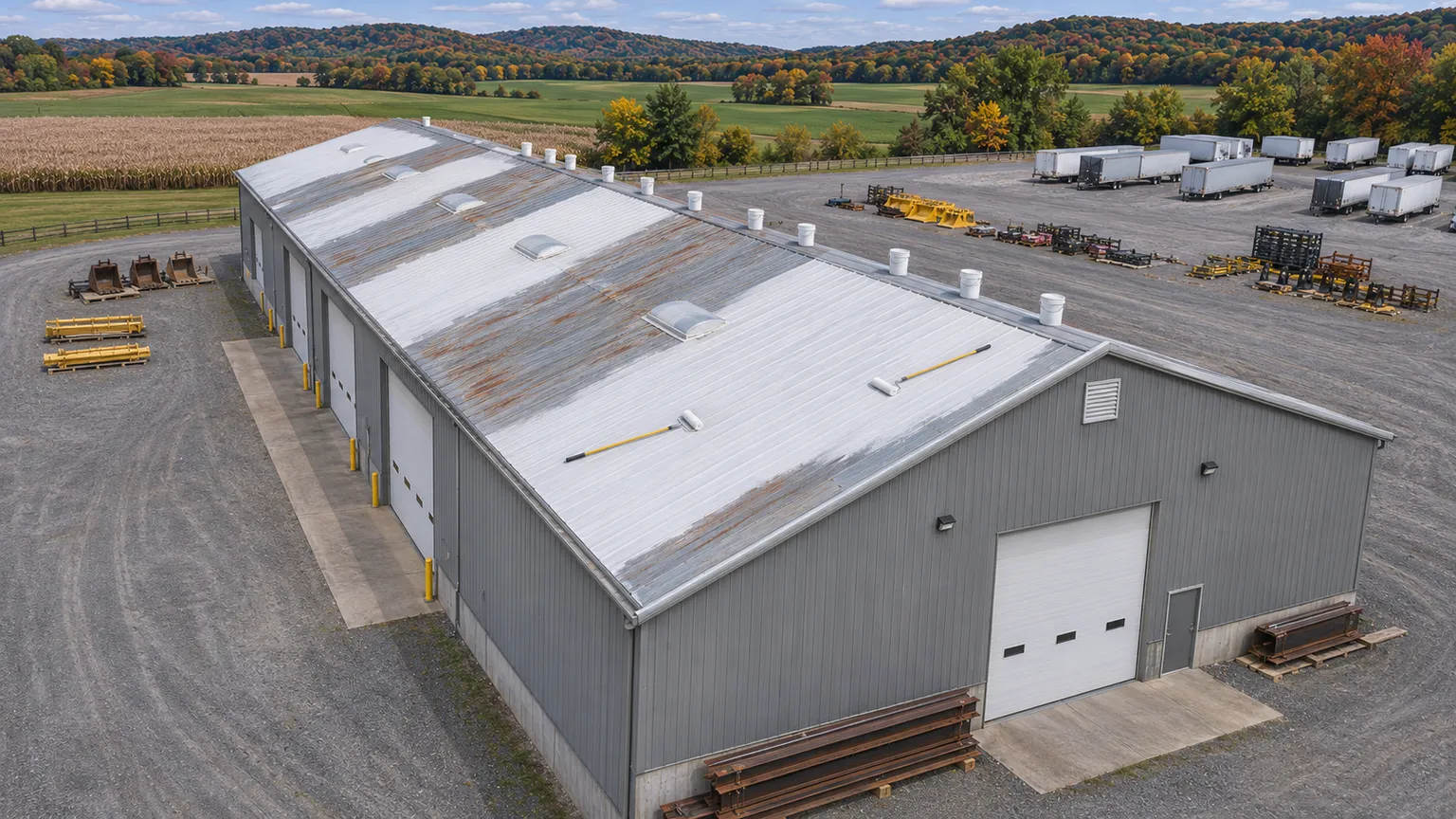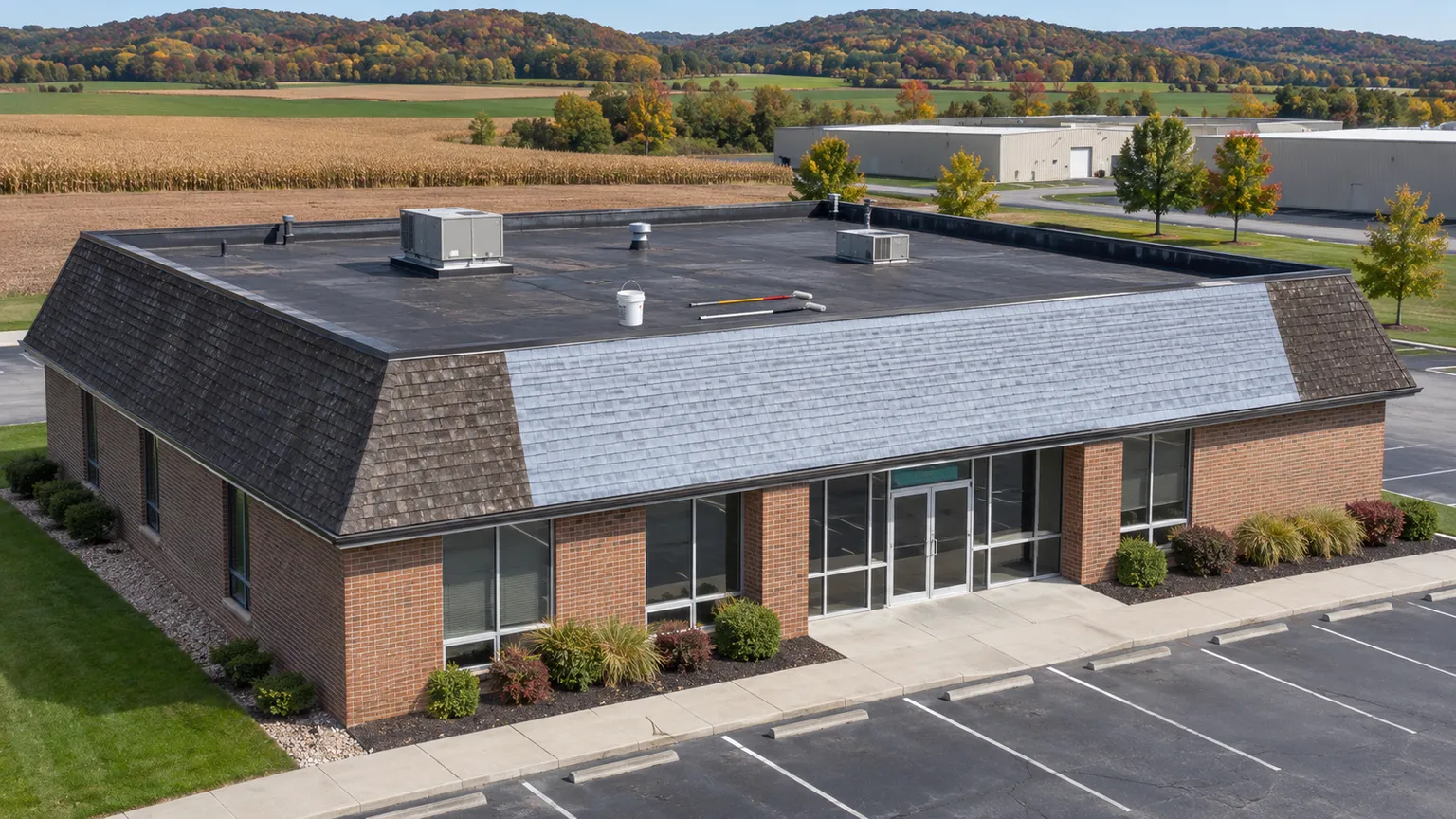

Top-down drone view of a low-slope commercial roof with a band of fresh silicone coating beside the older surface

York Silicone Roof Coating Contractor

Extend the Working Life of Low-Slope Roofs That Hold Water

As a York silicone roof coating contractor, we restore flat and low-slope commercial roofs after fixing drains, wet insulation, and open seams.

  • Drains Cleared First
  • Wet Areas Cut Out
  • Thickness Built At Seams

When York Silicone Roof Coating Fits

York silicone roof coating goes over low-slope roofs with a dry, well-attached surface. See which side your roof falls on.

Ready for Silicone

Low-slope roofs with dry insulation and closed seams are the target for silicone.

Roof Slope
Flat to low pitch
Standing Water
Dries within a day or two
Insulation
Dry in core samples
Existing Surface
Firmly attached membrane or metal
Seams
Closed and reinforced

Fix the Roof First

These problems come out or get repaired before any silicone goes down.

Roof Slope
Sagging or failed decking
Standing Water
Ponds behind a blocked drain
Insulation
Wet or crushed boards
Existing Surface
Blistered or loose membrane
Seams
Split or open

Silicone Roof Coating Warning Signs on York, PA Roofs

Low-slope roofs give clear signals before water gets through. Each one changes the prep list.

  • Water Backing Up at a Blocked Drain

    Call Now

    Standing water above a clogged drain loads the deck and finds every open seam. Call us to clear it and check the deck before coating plans go further.

  • Soft Spots Underfoot

    Repair First

    Spongy areas usually mean wet insulation under the membrane. We core or scan them, cut out the wet boards, and patch before silicone covers anything.

  • Blisters in the Old Membrane

    Repair First

    Blisters trap air or moisture between layers. They get cut, dried, and patched flat, since silicone over a blister lifts right along with it.

  • Chalky, Faded Surface

    Watch

    Chalking on an older coating or membrane is normal wear. Cleaning removes it, and an adhesion test tells us which primer the silicone needs.

  • Shrinking Flashing at Curbs

    Watch

    Membrane flashing that pulls away at curb corners is a common leak point. It gets re-adhered or replaced, then reinforced under the silicone.

Commercial Roof Coating Options for York

Silicone systems differ in how they bond and how thick they go on.

Direct

Silicone Over Clean Membrane

Some single-ply and older coated roofs take silicone directly after cleaning, once an adhesion test passes without primer.

Primed

Silicone Over Primed Surfaces

Aged asphalt, metal, and chalky coatings usually need a primer to block bleed-through and help the silicone grip.

Reinforced

Fabric at Seams and Drains

Polyester fabric embedded in silicone at seams, drains, and curbs adds strength where water collects and roofs move.

Ponding Areas

Extra Thickness at Low Spots

Low spots near drains get additional silicone beyond the field thickness, since standing water wears those areas first.

  • Distribution Buildings
  • Food Plants
  • Flat Office Additions
  • Older Brick Plants
  • Handles Ponding Near Drains

    Cured silicone sits in standing water without softening, which matters on low spots that stay wet for a day after storms.

  • Bright Surface Under Summer Sun

    White and light gray silicone reflect sun off the roof deck and away from the rooftop units sitting on it.

  • One Continuous Membrane

    Silicone flows over seams, fasteners, and old patches to form one surface with no laps of its own.

Benefits of Coating Your Roof

On a flat roof that holds some water, silicone does a few things well.

Wide drone view of a metal commercial building mid-coating, with a gravel lot, stored equipment, and farm fields around it

Puddles Still There Two Days After Rain?

Long-standing water usually points to a drain or deck problem. Get a planning range now and an inspection before any coating goes down.

Get A Free Estimate(610) 984-0541

Silicone Roof Coating Steps for York, PA Buildings

Drains and wet areas come first; silicone comes last.

  1. 1

    Inspect Your Roof

    Drains, seams, curbs, and soft spots get checked, and we take core samples or moisture readings where insulation looks wet.

  2. 2

    Clear Drains and Remove Wet Areas

    Blocked drains get cleared, and wet insulation is cut out and replaced with dry board, then patched flush with the roof.

  3. 3

    Clean and Prime

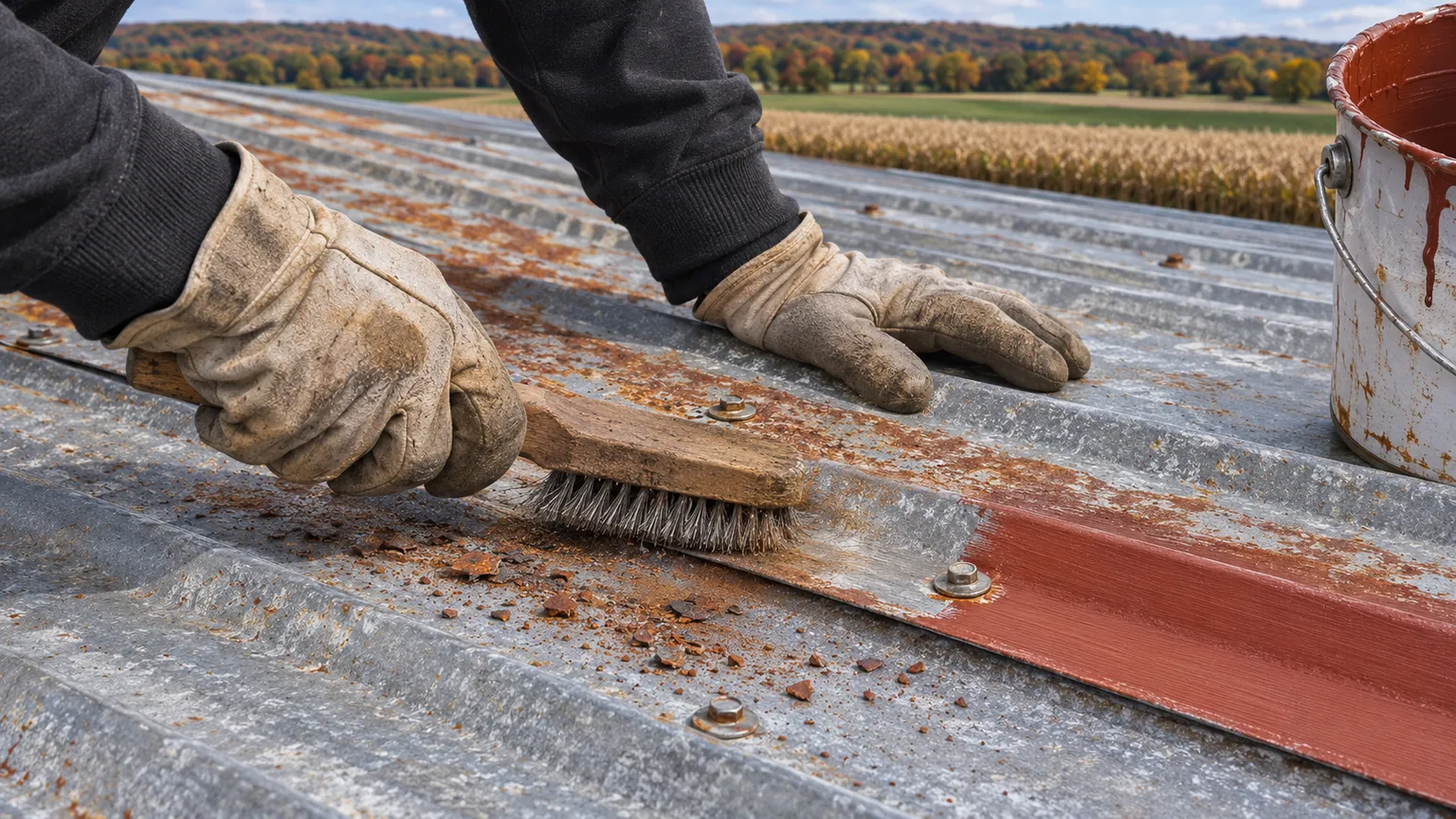
    Pressure washing takes off dirt and chalk. Primer goes on where the adhesion test calls for it, especially over aged asphalt or bare metal.

  4. 4

    Reinforce Seams and Penetrations

    Fabric and brush-grade silicone go over seams, drains, curbs, and pipe boots before the field coat.

  5. 5

    Apply Silicone at Full Thickness

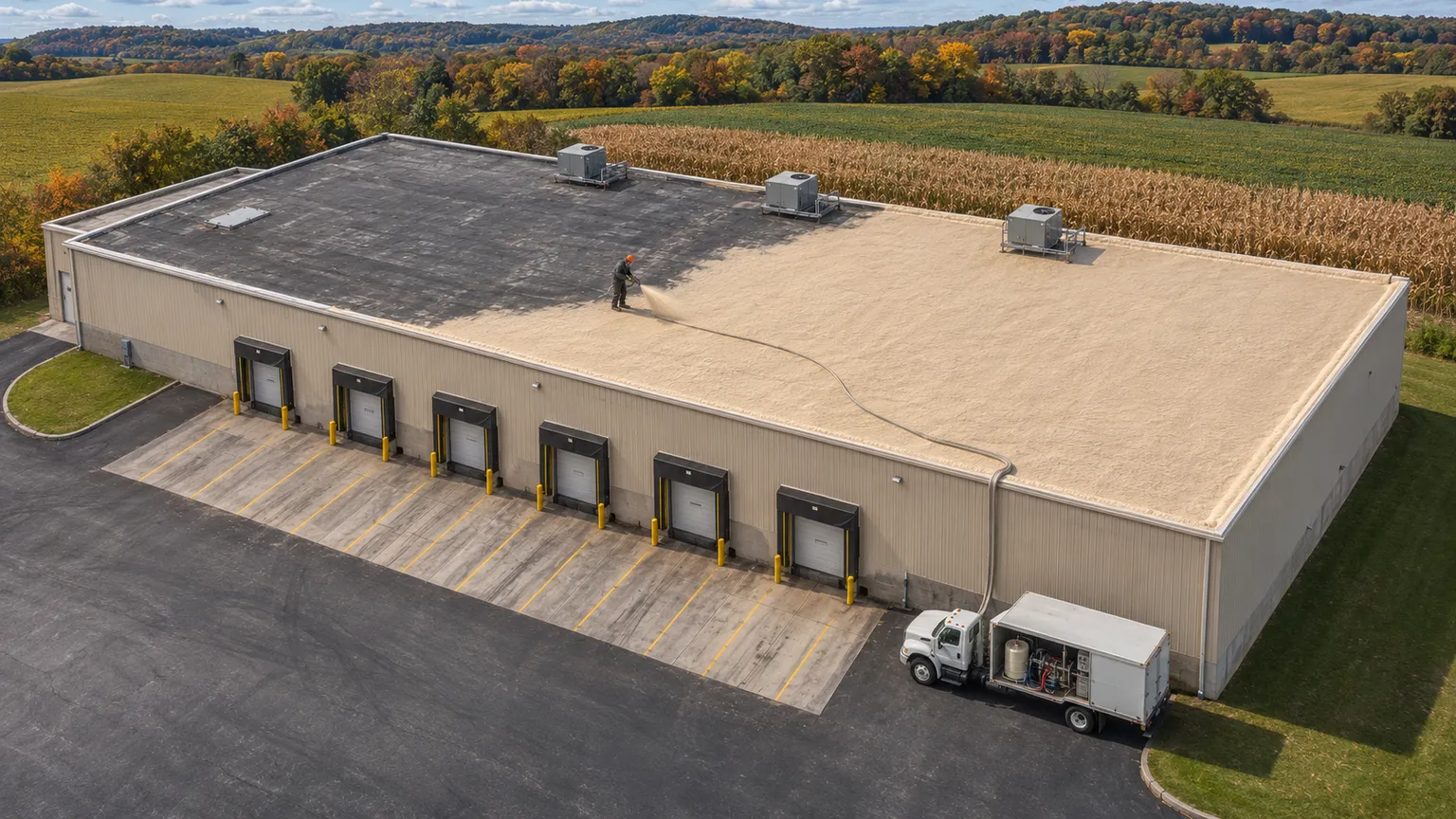
    Silicone is sprayed or rolled in the coats the system specifies, with wet-film readings recorded as each area is covered.

Other Roof Coating Systems Next to Silicone Roof Coating in York

Systems we use on the parts of a building that silicone would be wrong for.

York, PA Silicone Roof Coating Questions

Answers on thickness, ponding, and upkeep for silicone roofs.

Cost

Silicone vs Acrylic Roof Coating: Which Costs Less to Keep Up?

Both plan inside the same coating range of about $2.50 to $4.00 per square foot. Silicone handles ponding better, while acrylic is easier and cheaper to recoat later because most products stick to it. Which costs less over time comes down to how much water your roof holds.

Process

How Many Coats of Silicone Roof Coating Does a Roof Need?

Many silicone systems go on in one or two coats, but the real target is the finished thickness listed for that product. We follow the system’s coat sequence and measure as we go; one thick pass replaces two coats only when the maker says it can.

How Can an Owner Recognize Silicone Coating That Is Nearing Renewal?

Look for spots where the base layer or old membrane shows through, edges that lift under a fingernail, and thin areas around drains and walkways. Those signs tell us to plan a recoat, and we check the metal or membrane and the drainage before pricing it.

Can One Thick Silicone Application Replace the Specified Coat Sequence?

Only when the chosen system expressly allows it. Thickness at seams and penetrations matters as much as the field, and piling material on the open roof does nothing for a missed reinforcement at a joint. We follow the product’s coverage and coat sequence on every roof.

Coating Choice

How Long Does Silicone Roof Coating Last?

Its service life tracks thickness, preparation, and how the roof drains and gets walked on. We show you where wear will start, usually at drains and traffic paths, and set inspections so a fresh coat of silicone goes on before the old layer wears through.

Does Silicone Roof Coating Work on a Roof With Standing Water?

Silicone tolerates ponding better than acrylic, which is why it fits low spots near drains. The cause of the water still has to be fixed first, because coating seals the surface and leaves a blocked drain or sagging deck exactly as it was.

Does Silicone Work Better Than Acrylic on a Roof With Occasional Standing Water?

For roofs where water sits a day or two, silicone usually holds up better than acrylic. We still find out why the water stands, since a blocked drain or a damaged section needs repair either way, and coating does nothing for drainage.

Hire a York Silicone Roof Coating Contractor

Send your roof size for a planning range, or call to have your flat roof inspected.

Call Us(610) 984-0541