Primer Match
Bonding Primer for Two Finishes
One primer chosen to grip both the old paint and the newer galvalume, confirmed by pull tests on each.
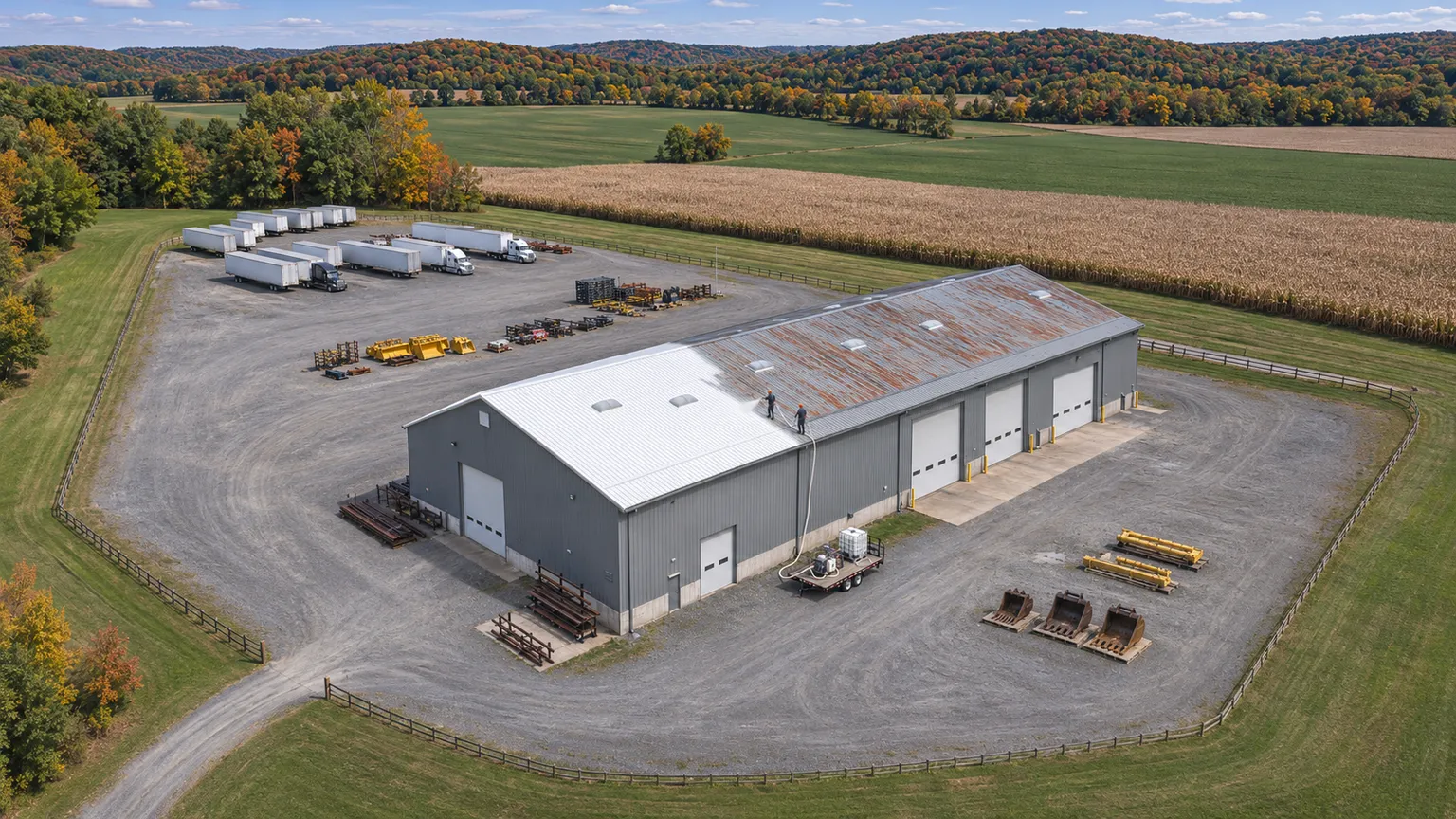
As a Hanover metal roof coating contractor, we coat steel roofs on plants and equipment shops, including roofs patched over the years with mismatched panels.
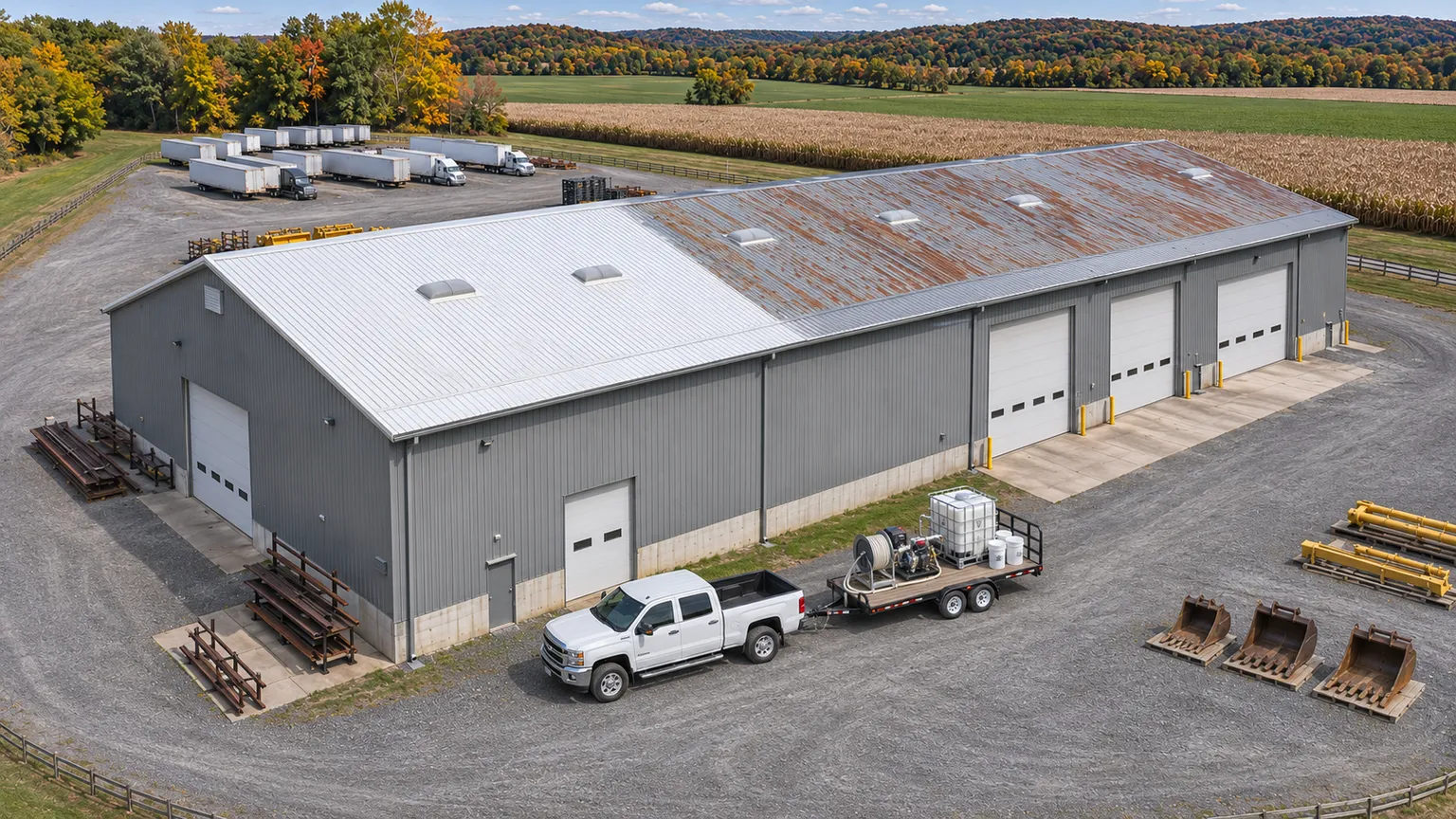
Hanover metal roof coating jobs often start on roofs where a few panels were swapped after storm damage or leaks. New galvalume beside older painted steel looks odd, but the real question is adhesion. We test each finish and choose a primer that bonds to both before coating ties them together.
These conditions show up most on patched and mixed-panel roofs around Hanover.
Coating that peels only on the newer panels usually means their finish was never tested. We strip the loose film and prime those sheets with a product that grips. Retesting after priming confirms the fix.
Replacement panels with a slightly different profile leave gaps at the side lap. Those gaps get closure strips or sealant before any coating bridges them. Closures are matched to each profile.
Mixed fastener ages along one purlin line make a loose head easy to miss. Every screw on that line gets checked, and the worn ones are replaced. A tight row keeps the coating from cracking at the heads.
Drips along the joint between an old panel and its replacement mean that lap was never sealed right. Call us to trace and close it before more rain gets in. Interior stains along that joint help us find it.
Field-cut edges on replacement sheets rust first because they lost their factory coating. We clean and prime every cut edge we find. Left alone, that rust creeps under the coating from the edge.
One coating system over primed old and new panels gives the roof a single surface to inspect and maintain.
Reinforced laps where replacement panels meet the originals close the joints most likely to leak.
Light topcoat over bare galvalume and dark old paint evens out how much sun each panel soaks up.
Primed cut edges on replacement sheets stop the edge rust that shows first on patched roofs.
On Hanover buildings with patched roofs, coating brings the roof back to one surface.
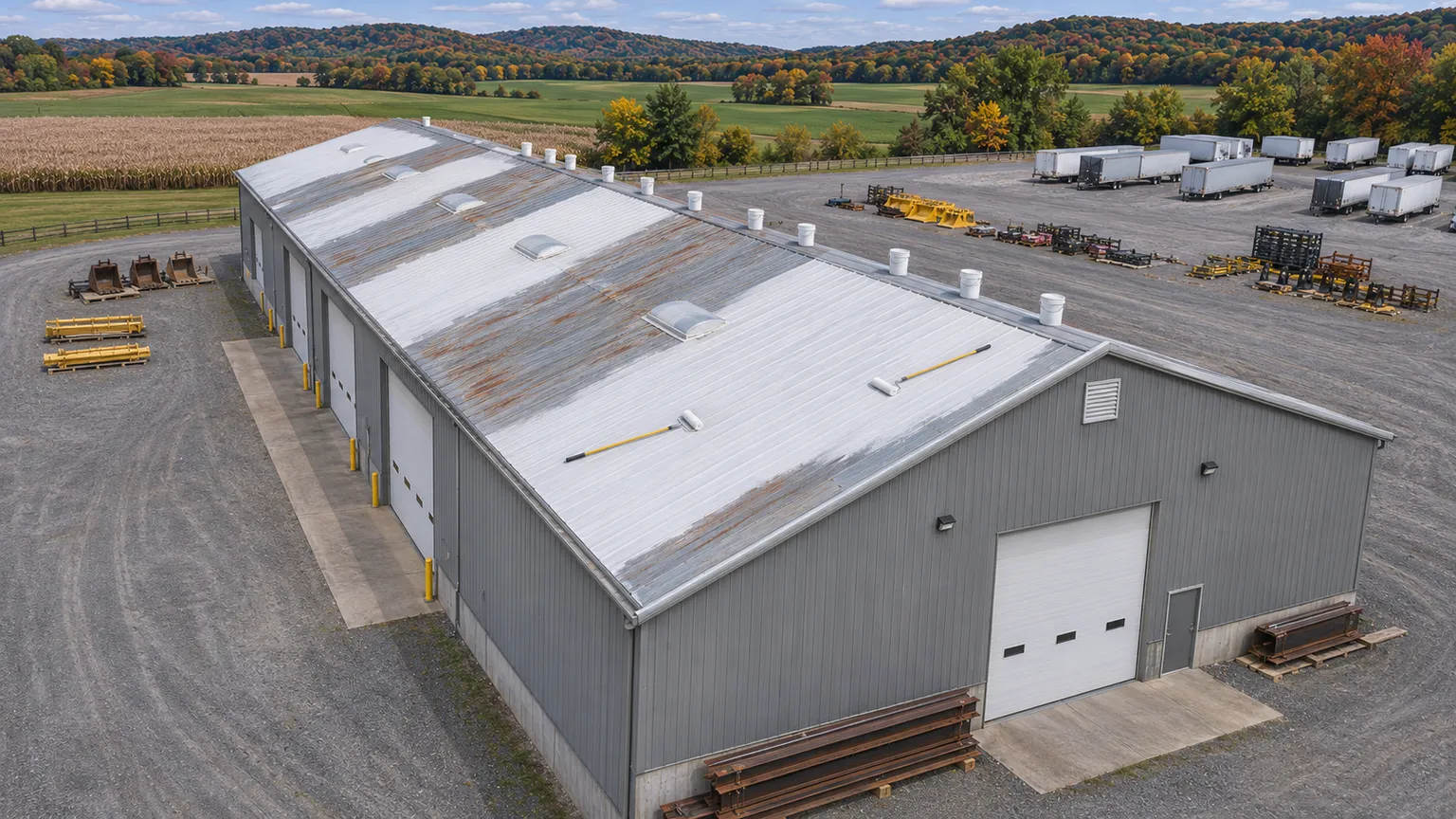
Coating builds we use on mixed-panel roofs in Hanover.
One primer chosen to grip both the old paint and the newer galvalume, confirmed by pull tests on each.
Two acrylic coats over primer fit pitched shop roofs that shed water fast.
Silicone over primer near gutters and low eaves, where water lingers after storms.
Foam or metal closures fill gaps where replacement ribs sit slightly off the originals, sealed before coating.
Peeling on replacement sheets usually traces back to adhesion. Get a planning range and an inspection that tests each finish.
Mixed panels add one test to the usual order of work.
We map which panels are original and which were replaced, then check laps, screws, and edges along each seam where they meet. Interior stains get matched to the panel joints above them.
Pull tests on the old paint and the newer galvalume show which primer holds to both. A failed test changes the primer or the panel.
Side laps get closure strips or sealant, cut edges are primed, and loose screws are replaced. Closure strips go in wherever ribs sit off line.
Pressure washing clears dirt and chalk, then the chosen primer goes over both panel types. Both finishes get the same primer only when tests show it holds.
Base and topcoat cover old and new panels alike at the listed thickness. Thickness readings are taken on both panel types.
We also coat metal roofs in these towns. Somewhere else? Call us or send us a message.
Food plant roofs with cleaning planned around intakes.
Machinery buildings with long lap runs that need reinforcement.
Industrial roofs documented with photos before coating.
Farm shops where safe roof access comes first.
Answers for Hanover plants and shops.
Planning ranges run about $2.50 to $4.00 per square foot of roof for coating and about $5 to $8 for replacement. On mixed-panel roofs, the extra adhesion testing, closure strips, and edge priming push a job toward the upper end of the coating range.
A little, through the extra testing, closures, and edge priming they bring. Panels that fail adhesion even after a second primer add replacement cost on top. The rest of the roof prices the same as any steel roof of its size.
Yes, if both panel types can be prepared for the same system. Looks matter less than bond: we test adhesion on each finish, fix the laps where they meet, and pick a primer that grips both before coating.
We take shop roofs as well as plant roofs in Hanover. Smaller roofs get the same inspection, repairs, and coating steps, and the planning range still starts from roof area.
That finish gets more preparation, usually abrasion and a different primer, and a second test. If it still fails, those panels are replaced or the system changes for that part of the roof, before any coating is bought.
Plants that vent heat, steam, or grease onto the roof need a system rated for those conditions around the vents. We look at what comes out of each fan and choose primer and coating for that zone, sometimes a different product than the rest of the roof.
Newer galvalume panels often need a specific primer or a cleaning step before coating grips well. We confirm with a pull test on your sheets, because a primer that works on old painted steel can fail on fresh galvalume.
Send your roof size for a planning range, or call to book an adhesion test and inspection in Hanover.