Fabric
Three-Course Seam Detail
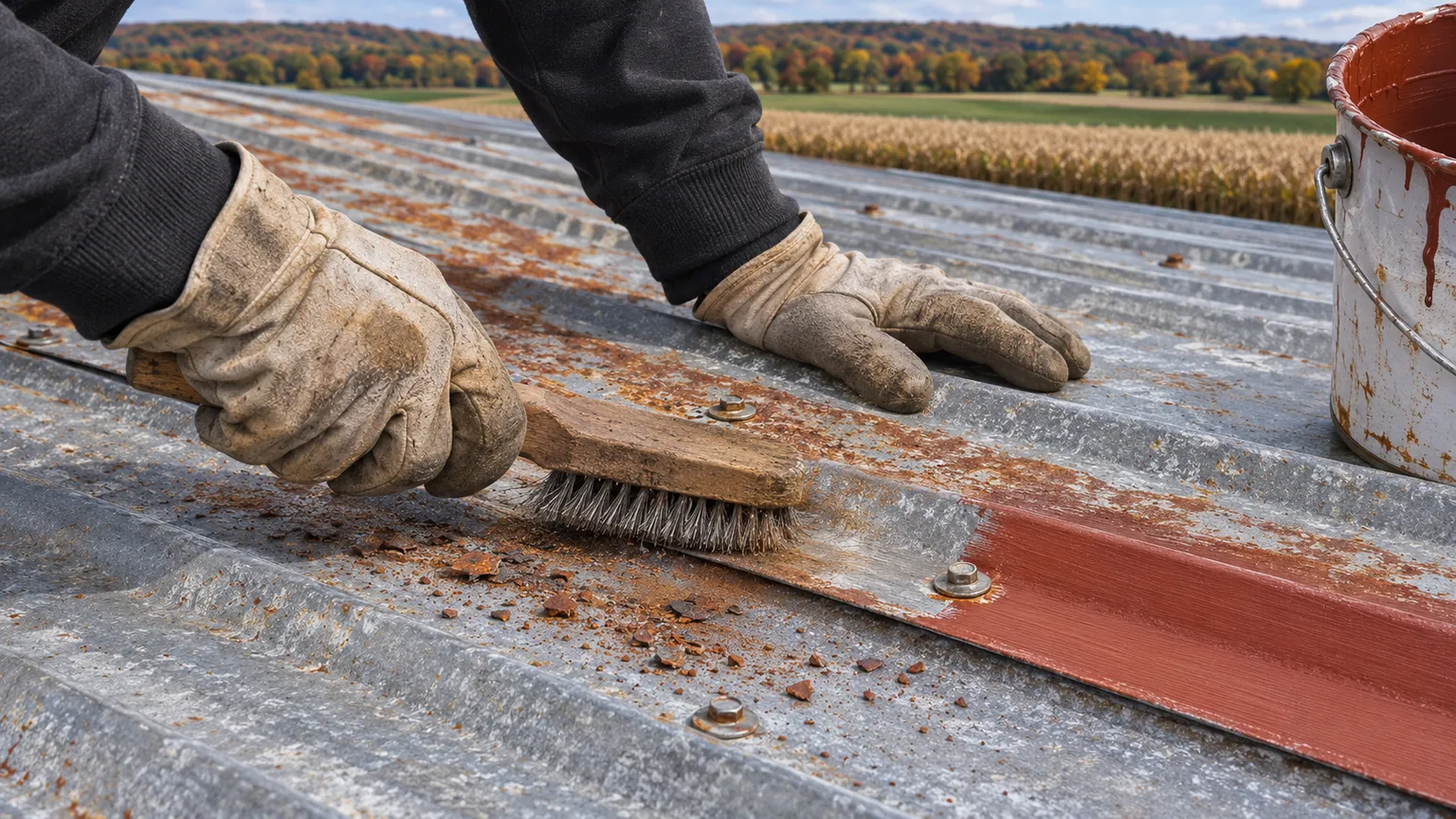
Brush coat, fabric, and a second brush coat over each lap before the field coat.
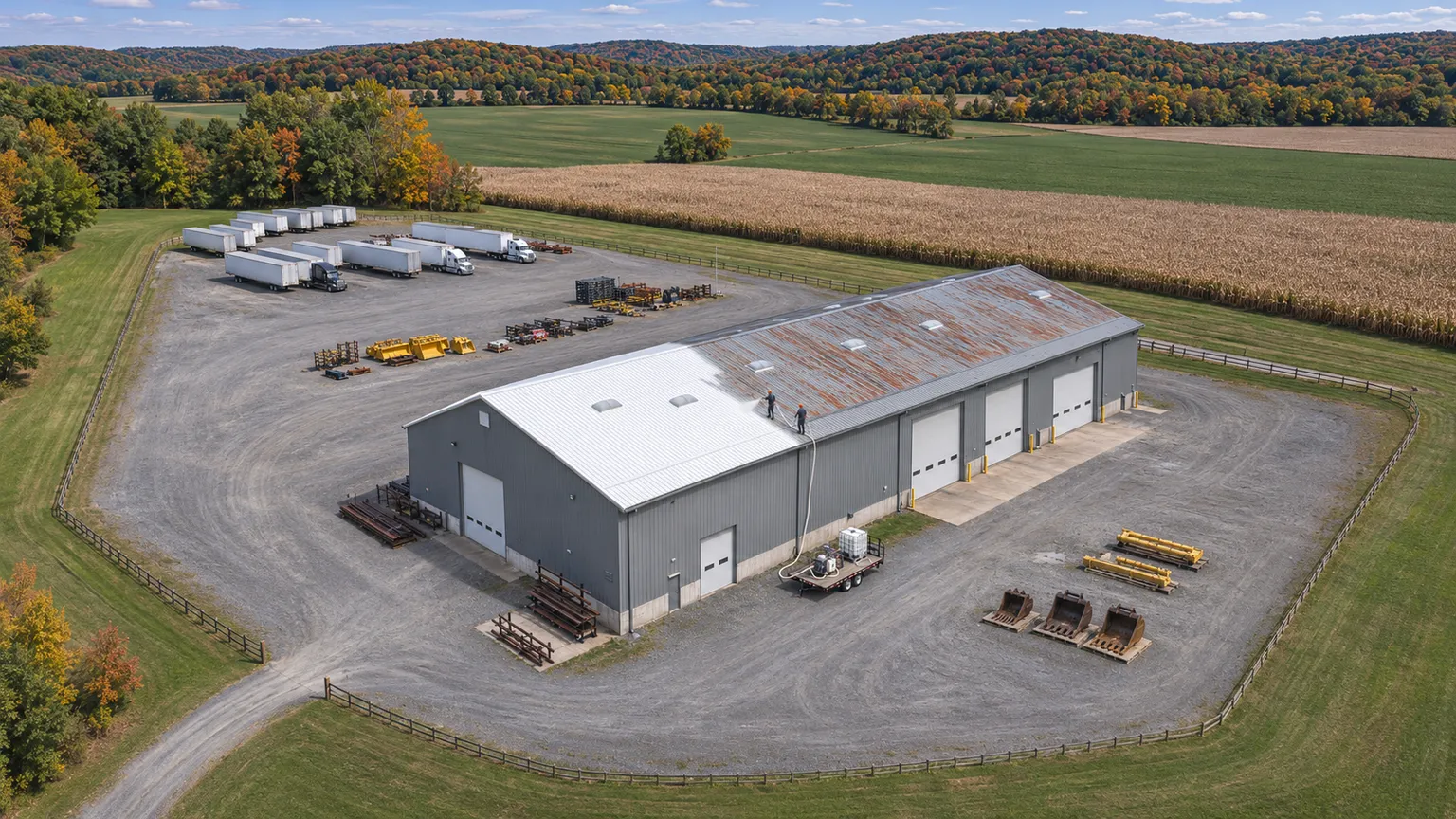
As a Red Lion metal roof coating contractor, we fasten, reinforce, and coat the long lap runs on machinery and manufacturing buildings.
Red Lion metal roof coating on machinery buildings comes down to the seams. Long panel runs grow and shrink with temperature, and laps that are not held tight open a little more each year. We check fastening and movement at every joint, then add reinforcement where the selected system calls for it.
On fabrication shops and machinery buildings, that seam work is usually the biggest part of the job, and it decides whether the coating stays whole through the next few winters.
Seams on long-run roofs show movement before they leak.
Gaps that widen in cold weather mean the lap needs more fastening. Reinforcement alone tears if the panels keep moving. We fasten first, then reinforce.
Holes worn oval by movement let screws rock. We move to the next screw size or add stitch screws nearby. Washers are replaced at the same time.
Brittle lap sealant cracks first along the longest runs. It gets cut back and replaced before coating. New sealant goes in under the fabric.
Wind-driven rain at ridge caps and transitions points to open closures. Call us so we can check them before the next storm. Closures get replaced where foam has crumbled.
Wavy flats are mostly cosmetic, but they show where panels are stressed and where to watch the laps. Laps beside wavy panels get extra attention.
Fabric-reinforced coating at laps stretches with normal panel movement once fastening is restored.
Primed and sealed laps keep water out of the joint, where rust usually starts on long runs.
Seam work and coating happen from the roof, so shop floors and machines below stay in use.
Refastened closures and coated ridge caps keep wind-driven rain out at the top of the roof.
On machinery buildings with long runs, coating pays off once the seams are steady.
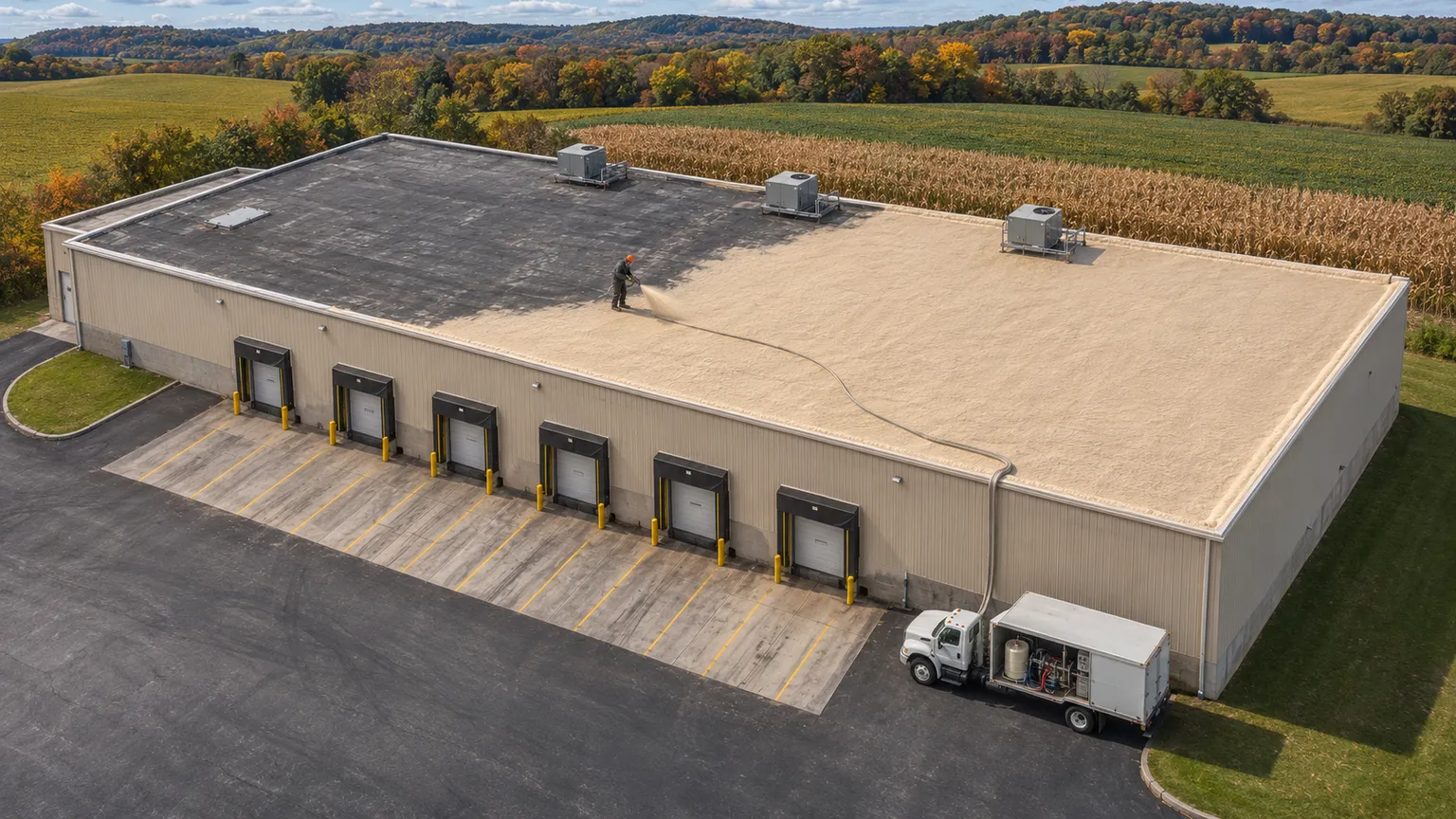
Seam-focused coating builds we use in Red Lion.
Brush coat, fabric, and a second brush coat over each lap before the field coat.
Two acrylic coats over primer for pitched roofs that drain well.
Silicone where long runs flatten near the eave and water lingers.
Extra stitch screws along lap lines hold panels together so reinforcement and coating stay intact.
Laps that gap in winter need fastening before coating. Get a planning range and an inspection of every joint.
Fastening comes before fabric, and fabric before the field coat.
Every lap gets checked for gaps and movement, screws are tested along the purlins, and ridge caps and closures are checked for wind damage. Leak spots inside get matched to the laps above.
Oversized or stitch screws go in where laps flex, and failed closures are replaced. Each repaired lap gets checked again by hand.
Washing removes dirt and old sealant residue; rust at laps is cleaned and primed. Bare steel is primed on the same visit.
Fabric goes into a brush coat over each lap and ridge cap, then a second coat locks it in. Seams then cure before the field coat goes on.
Base and topcoat cover the panels at the listed thickness once the seams have set. Readings are taken at several points along long runs.
Beyond Red Lion, we coat metal roofs in these towns. Elsewhere? Call us or send us a message.
Patched roofs where old and new panels meet.
Snack plant roofs washed without fouling air intakes.
Commercial roofs with a written record under the coating.
Pole buildings converted from nails to gasketed screws.
Answers for machinery and fabrication buildings.
Roof area sets the starting range: about $2.50 to $4.00 per square foot for coating and $5 to $8 for replacement. Seam reinforcement, stitch screws, and closure replacement on long-run roofs add to the coating side of that range.
They add labor along every lap that flexes, which on long-run roofs can mean thousands of screws. That work sits inside the coating range and keeps the reinforced seams intact through winter movement.
Often, yes, though it depends on the system and the joint. Reinforcement goes into a seam after the fastening is fixed; it supports a stable joint and will not hold together a lap that keeps separating.
Call or send the roof size, and we will set an inspection time that works around your shop schedule. Mention any active leaks on that call so we can look at those first.
Steel shrinks in the cold, and on long runs that movement adds up at the laps. Loose or worn screws let the joint open further each season. Restoring fastening first keeps the reinforced coating from tearing.
Ridge caps and their closures take the most wind on long buildings. We refasten loose caps, replace crumbled closures, and reinforce the cap laps before the field coat, so wind-driven rain stays out at the top.
Acrylic and silicone systems both work over reinforced seams once the laps are fastened. Pitch and drainage decide between them: well-drained runs take acrylic, and flat areas near the eave lean toward silicone.
Rarely. Wavy flats are a cosmetic stress pattern in most cases. We check the laps and screws near them, and if the panels are solid and fastened, coating goes over them normally.
It can, and on roofs with many moving laps we often recommend it. Where laps are tight and short, sealant plus a brush coat is enough, and fabric goes only on the laps and ridge caps that showed movement.
Get a planning range from your roof size, or call to have every lap checked.