Acrylic
Acrylic on Pitched Shops
Primer and two acrylic coats on well-drained shop and equipment roofs.
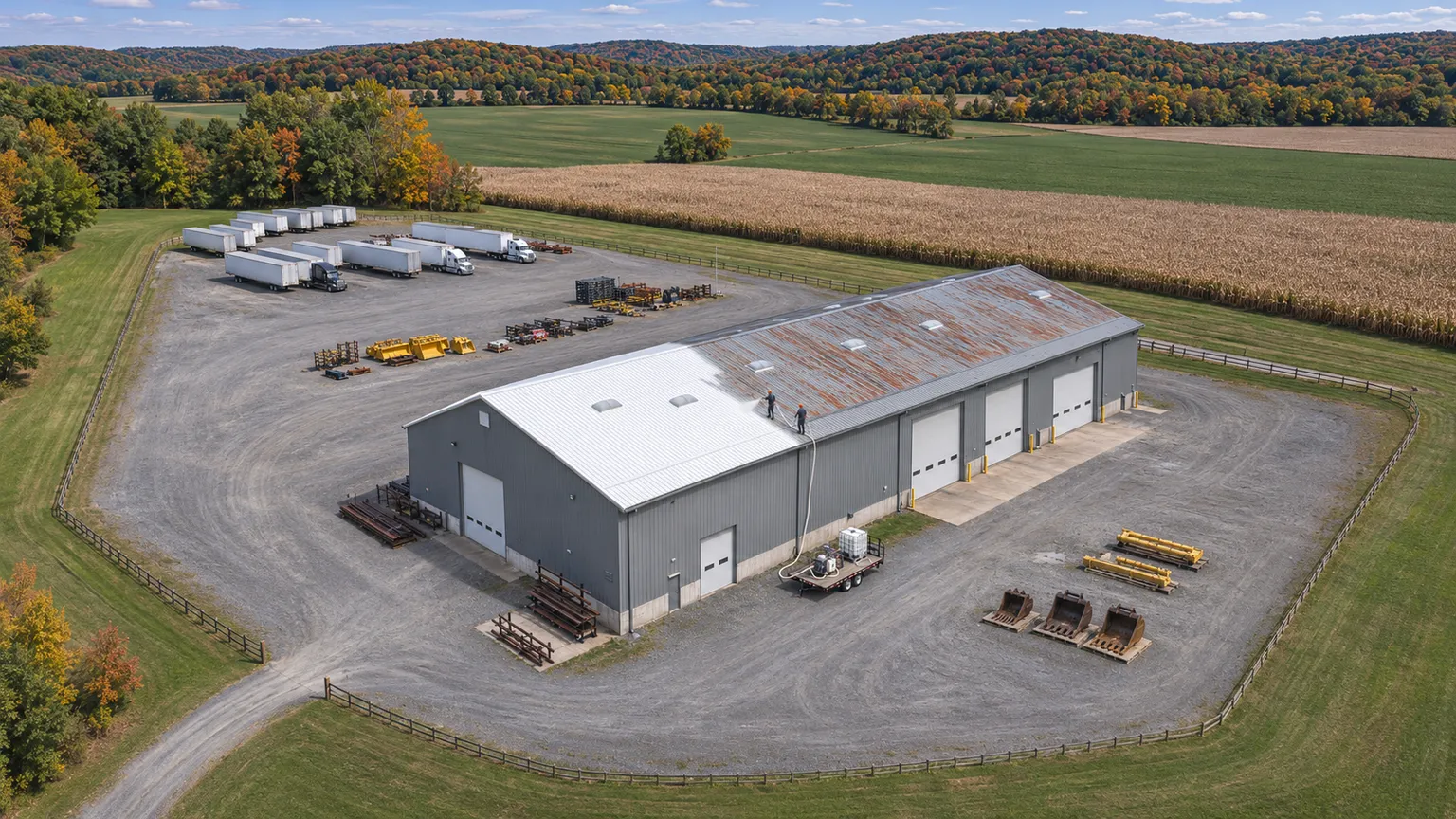
As an Oxford metal roof coating contractor, we coat steel roofs on farm shops, equipment buildings, and rural businesses, starting with a safe way onto the roof.
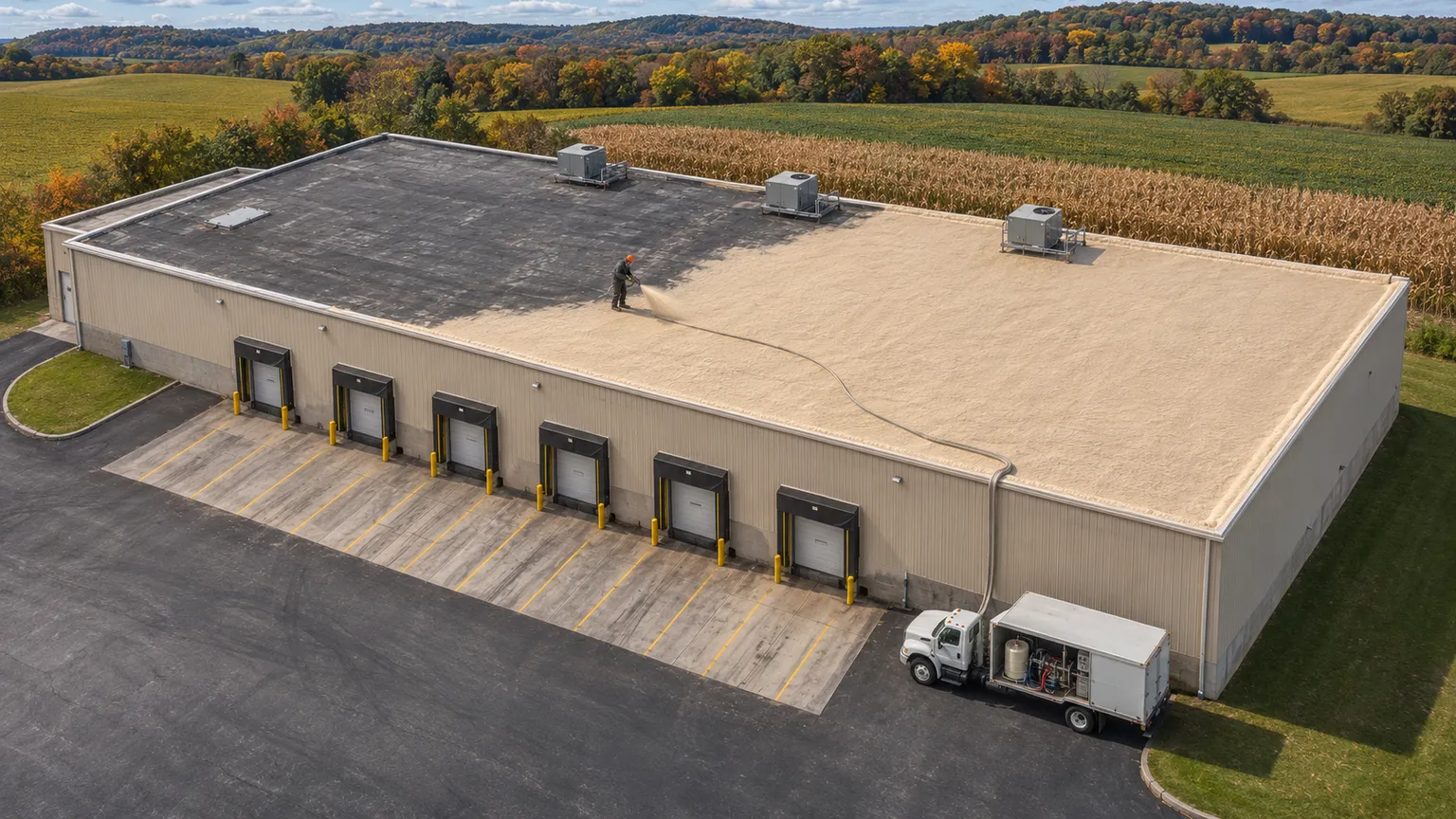
Oxford metal roof coating on a farm building starts on the ground. Equipment, stored hay or feed, and tight yard space often sit between the eave and the only spot for a ladder or lift.
You point out what restricts access, and we plan a route that fits the building, so nobody on your staff has to climb. Once we are up, the inspection covers panel joints, roof edges, ridge caps, and pipe penetrations, and we compare what we see on top with the leak spots you show us inside.
Farm and rural shop roofs wear in their own ways.
Moist, ammonia-laden air from animal areas rusts panels from the inside. We check the underside and replace thin sheets before coating. Ventilation inside helps slow it too.
Wind catching open ends lifts panel edges and loosens screws. Those edges get refastened and trimmed before coating. Gable trim gets replaced where it is bent.
Older pole buildings often have nailed panels that back out over time. We replace them with gasketed screws. The old nail holes get sealed as well.
Leaks over feed or machinery cost money fast. Call so we can find the entry point and patch it. A tarp below limits damage until then.
Equipment strikes and ice bend gutters on farm buildings, sending water down the walls. We note and repair them during prep. Bent hangers get replaced so gutters drain.
New gasketed screws and sealed laps stop the drips that land on equipment and stored goods.
Primer and coating over treated rust slow corrosion on panels that see barn moisture.
Light topcoats keep shop and storage space cooler on sunny days.
Repaired gutters and coated eaves send rain away from walls and stored equipment instead of down the siding.
On farm and rural shop roofs, coating earns its keep in practical ways.
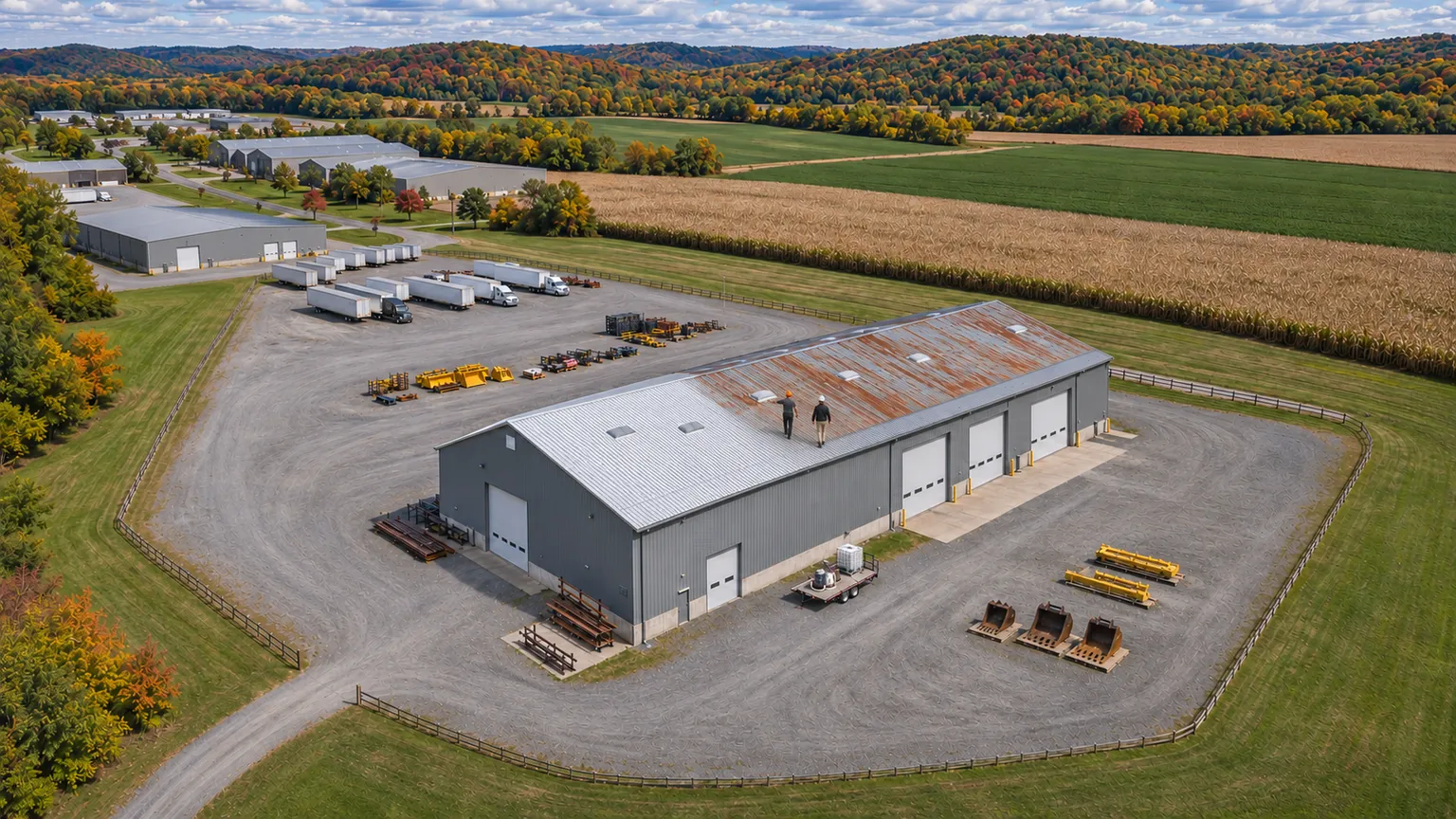
Coating builds we use on Oxford farm and shop roofs.
Primer and two acrylic coats on well-drained shop and equipment roofs.
Panels exposed to livestock moisture and ammonia get a primer chosen for that underside exposure.
Spray foam with a topcoat where a flat addition needs insulation.
Every nail on the roof is pulled and replaced with a gasketed screw before any coating goes on.
Water landing on machinery or feed needs quick attention. Call and we will plan safe access and find the leak.
Access planning comes before the first step on the roof.
After agreeing on safe access, we check panel joints, roof edges, penetrations, and the underside for moisture rust. Leak spots inside get shown to us on the way up.
Nails become gasketed screws, loose edges are refastened, and thin panels over animal areas are replaced. Thin sheets get checked from below as well.
Washing clears dust and debris; rust spots are cleaned to firm metal and primed. Rust over animal areas gets the moisture-resistant primer.
Laps, ridge caps, and pipe flashings get sealant and fabric before the field coats. Ridge vents get sealed or flashed as needed.
Base and topcoat go on at the listed thickness, staged around equipment moves you schedule. Equipment goes back once the coating cures.
We coat metal roofs in these towns too. Farther out? Call us or send us a message.
Food plants where replacement sheets need primer tests.
Snack plants with wash water routed to drains.
Fabrication shops with reinforced seams under the coating.
Older industrial roofs with photo records kept.
Answers for farm and rural business owners.
Farm shops plan at about $2.50 to $4.00 per square foot of roof for coating, compared with $5 to $8 for replacement. Nail-to-screw conversion, panel swaps over animal areas, and lift access are the items that move an Oxford roof up the coating range.
When a ladder cannot reach safely, a lift goes into the price. Clear ground and a firm path for the lift keep that cost down, which is one reason we ask what is stored near the walls before the inspection.
Clear the ground around the building and tell us what is stored near the walls. We bring the ladder or lift and plan the climb ourselves, and your staff stays on the ground. We also want to see any interior leak spots during the visit.
Yes. Rural shops, storage buildings, and small commercial buildings around Oxford get the same inspection, repairs, and coating process as farm buildings.
We stage the work around the equipment moves and busy weeks you tell us about, and coat in sections so the building stays usable.
Any drip marks, rusted purlins, wet feed, or stained insulation. Those spots tell us which panels and laps to open first on the roof, and they help confirm the leak is fixed afterward.
We coat pole buildings and steel farm shops around Oxford. Nailed panels get converted to gasketed screws first, and the coating system is picked for the moisture coming from inside the building.
It changes the primer more than the topcoat. Panels over animal areas take moisture and ammonia from below, so we check the underside and choose a primer that resists that exposure before the coating goes on.
Pitched farm shop roofs that drain well usually take acrylic over primer, which recoats easily. Silicone goes on low sections where water lingers, such as a flat lean-to along one side.
Send your roof size for a planning range, or call to plan safe access and an inspection.